Need mold inspection & testing services in Eagle?
Found something odd on a wall or ceiling? Send a quick request and a local provider can follow up to talk through your options.
No obligationMold help across the Eagle area from local providers
Request an inspection estimate
Say you spot dark patches on a basement wall or catch a musty smell near a window. You want answers, not guesses. Movementsrepresents Mold Help connects homeowners in the Eagle area with independent providers who inspect homes for mold and take samples when testing makes sense.
A good visit looks at where moisture is coming from, not only at the stain. The provider checks walls, ceilings, crawl spaces, and basements, then explains what the findings mean in plain words. You can request an estimate online, or Request a callback to check provider availability. Movementsrepresents Mold Help does not do the inspection itself. It simply helps you reach providers in our network who do.
Say you come home after a stormy week and notice a dark, fuzzy patch near the ceiling. Your mind races. Pause. Mold is common, and a calm first hour helps you make better choices.
Mold needs water. No water, no growth. That is why a solid inspection starts with a question: where is the damp coming from? A stain you wipe away will simply return if the leak stays.
Say you notice a sour, earthy smell in the basement but see nothing. Hidden growth behind walls or under flooring can make that smell. An inspection can trace it.
Spring melt, hail damage, and heavy thunderstorms can push water into a home. If anything stayed wet for more than a couple of days, a check is wise.
Some buyers want a look before closing. Others want proof that a repair worked. Both are fair reasons to ask a provider to visit.
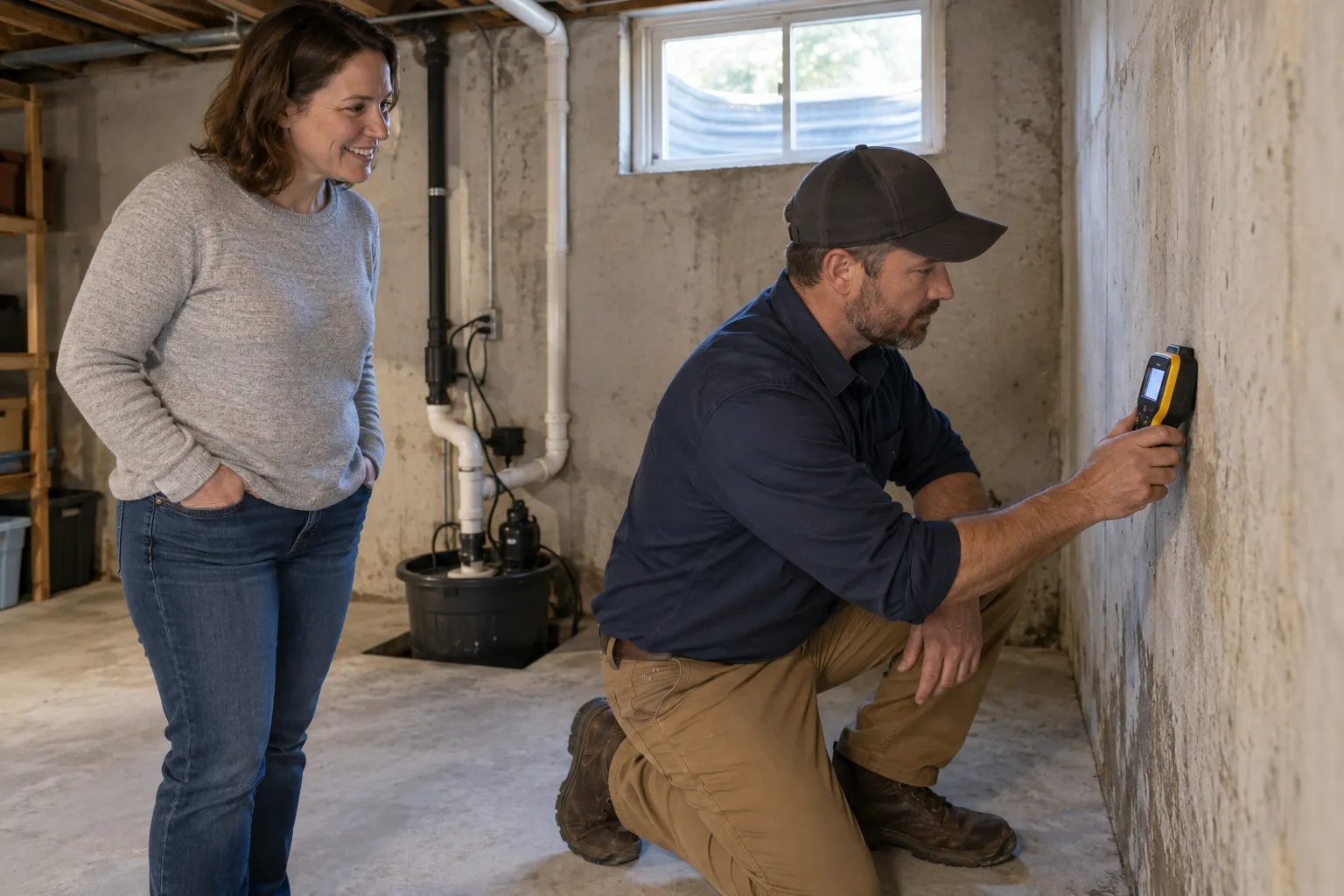
The provider walks through the home and asks what you have noticed. Then comes the hands-on part. They look at walls, ceilings, windows, and around plumbing. Many use a moisture meter, and some use a thermal camera to spot cool, damp areas behind surfaces.
In a house with a full basement and a sump pump, expect extra attention there. The provider may check the sump pit, the foundation walls, and the rim joists. In an older frame house, attics and crawl spaces often get a close look too.
At the end, you should get a clear explanation of what was found. Ask for it in writing.
Not every inspection needs a lab. Testing is a tool, and the provider can tell you when it helps. If you want certified mold testing, ask the provider what credentials they hold and who runs the lab work.
A small pump pulls air through a collector. A lab counts spores. Providers often compare indoor air to outdoor air.
A swab or tape lift takes a bit of material from a visible spot. The lab can name the type of mold present.
These are not lab tests, but they matter a lot. They show whether a wall is still damp, which tells you if the problem is active.
A lab report can look like a wall of numbers. Ask the provider to walk you through it. Spore counts mean more when compared with outdoor air from the time of testing, and they shift with weather.
Say the report names a common household mold. That does not mean panic. It means the moisture source needs fixing and the area may need cleanup. The type of mold matters less than how much there is and why it grew.
Some homeowners prefer one provider for both steps. Others like a separate inspector so the findings come from someone who is not selling the cleanup. Either path can work. Ask what fits your comfort level, and get each step quoted in writing.
If the inspection shows a larger problem, a provider in our network can also discuss removal. That is its own step, with its own estimate.
In winter, deep frost can leave cold walls that collect condensation. Spring flooding brings damp basements. Hot, humid summers feed growth in closed-up rooms and crawl spaces. Fall storms can leave roofs and gutters leaking.
This means the smartest time to check is when you first notice a sign, not after a season changes. Moisture readings are also easiest to read while a problem is active.
Some home insurance policies may cover sudden damage, so check your policy. Providers can often help document damage for a claim.
Ready to talk with a local provider? Request a callback to check provider availability.
A provider checks rooms, basements, attics, and crawl spaces for signs of growth and damp.
Meters and thermal cameras help find damp spots hidden behind walls and floors.
Air or surface samples can be taken and sent for lab review.
You receive a plain explanation of what was found and what to do next.
Prices depend on home size, access, and how many samples are taken. These are typical U.S. ranges, not quotes. Always ask for a written quote before booking any visit.
| Item | Typical range | Notes |
|---|---|---|
| Visual mold inspection | $300 – $500 | Smaller homes usually land at the lower end. |
| Inspection with sampling | $450 – $1,000 | Depends on number of samples and rooms. |
| Single air sample | $50 – $200 | Lab fees often charged per sample. |
| Surface swab or tape lift | $40 – $150 | Used for a visible spot. |
| Thermal camera or moisture mapping | $100 – $300 | Often added to an inspection. |
| Post-cleanup clearance test | $200 – $600 | Confirms cleanup worked. |
Tell us where the spot is, what you noticed, and when.
A local provider in our network reviews your request.
The provider checks for moisture and growth, and may take samples.
You get a plain explanation and a written quote for any work.
You learn whether the spot is mold, where the damp comes from, and what choices you have.
Readings and samples replace worry and guesswork with real information.
Providers in our network know how regional weather affects local homes.
Request an estimate online and compare options at your own pace.
Found something odd on a wall or ceiling? Send a quick request and a local provider can follow up to talk through your options.
No obligationFound something odd on a wall or ceiling? Send a quick request and a local provider can follow up to talk through your options.
No obligation